
 22nd November 2026
Introduction
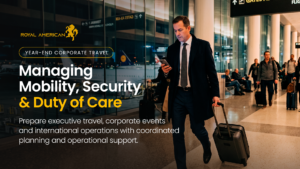
The final months of the year can bring a demanding combination of executive travel, corporate events, international meetings, leadership retreats and business commitments. Organizations may need to coordinate several travelers across different destinations while managing changing schedules, limited flexibility and operational requirements that vary from one location to another.
During this period, transportation arrangements often become closely connected to broader business priorities. Executives may need to attend meetings in multiple cities, teams may travel to conferences or corporate events, and international visitors may require coordinated airport transfers, ground transportation and local support.
At the same time, organizations remain responsible for considering the safety and well-being of their employees and other travelers within the scope of their duties. This makes year-end travel planning an important part of corporate mobility, security and Duty of Care.
Effective preparation requires more than booking flights and vehicles. Organizations need to understand the purpose of each trip, identify relevant travel risks, coordinate transportation resources, establish communication procedures and prepare for changes that could affect the itinerary.
For companies managing executive travel, international assignments or complex corporate events, an integrated approach can help maintain visibility across transportation arrangements and support more informed decisions throughout the journey.
Royal American Group supports executive and corporate transportation, Executive Protection, Travel Risk Management, Duty of Care and operational coordination according to the requirements of each engagement.
This article explores how organizations can prepare for year-end travel, align mobility with security requirements and establish practical procedures for managing changing conditions during international operations.
1. Why Year-End Travel Requires Early Planning
Year-end travel can involve several activities taking place within a relatively short period. Executives may attend conferences, visit regional offices, meet clients, participate in leadership events or travel between countries before the end of the business year.
These commitments can create additional coordination requirements, particularly when several travelers or teams are moving at the same time.
Transportation availability, airport transfers, hotel arrangements, venue access and meeting schedules all need to align. If one part of the itinerary changes, other arrangements may need to be reviewed.
For example, a delayed arrival could affect an executive’s first meeting, a transfer between venues or a scheduled departure. When several appointments depend on the same transportation resource, a small change can influence the timing of the entire sequence.
Early planning gives organizations more time to identify these dependencies and confirm the arrangements required for each movement.
A useful starting point is to consolidate upcoming travel requirements into a single planning overview. This should include confirmed trips, tentative dates, destinations, travelers, business priorities and important scheduling constraints.
The organization can then identify which trips require additional coordination, which movements are time-sensitive and where transportation or support resources may be needed.
Planning should also account for the fact that not every detail will be confirmed at the same time. Tentative itineraries should be clearly distinguished from approved arrangements so that teams understand which elements remain subject to change.
The earlier these requirements are identified, the easier it becomes to assess resource availability, coordinate responsibilities and prepare alternatives where necessary.
2. Build a Complete View of Executive Travel Requirements
Executive travel planning should begin with a clear understanding of the business agenda.
A flight itinerary alone does not provide the full picture. Organizations also need to consider the movements that take place before and after each flight, the locations involved, the timing of meetings and the support required at each destination.
For a trip involving several cities, this may include airport transfers, hotel transportation, office visits, meetings with external stakeholders and travel between venues. International assignments may also involve different local providers, time zones and access requirements.
A consolidated itinerary helps connect these activities.
For each trip, organizations should confirm the essential details, including travel dates, destinations, meeting locations, passenger requirements, transportation arrangements and designated contacts.
The itinerary should identify important dependencies. A meeting may need to finish before a scheduled airport transfer, while a group movement may depend on several travelers arriving at the same location.
These dependencies are especially relevant when an executive has a limited window between commitments.
Planning should also clarify which details are confirmed and who is responsible for communicating updates. When changes occur, the relevant participants need a reliable way to establish which version of the itinerary is current.
For organizations with multiple executives traveling simultaneously, centralizing this information can help reduce duplication and make it easier to identify conflicting schedules or competing resource requirements.
The objective is to create a practical operational overview that connects travel arrangements to the business agenda they support.
3. Coordinate Transportation Before Demand Increases
Ground transportation is a central part of many corporate travel programs, yet its requirements can become fragmented when each transfer is arranged separately.
A single executive may need transportation from the airport to a hotel, between several meetings and back to the airport. A corporate event may require simultaneous arrivals and departures for executives, speakers, guests and support teams.
Each movement has its own timing and resource requirements, but the movements may also depend on one another.
Transportation coordination helps organizations manage these relationships.
Before travel begins, the team should confirm pickup locations, scheduled times, passenger counts, vehicle requirements, destinations and relevant access instructions. For complex itineraries, it is useful to review the complete sequence rather than validating each transfer in isolation.
Resource allocation should reflect the actual requirements of the movement. Vehicle availability, passenger capacity, luggage needs, accessibility considerations and the nature of the assignment may all influence the appropriate arrangement.
Organizations should also establish how changes will be handled. If a flight is delayed or a meeting runs longer than expected, the team needs to know who receives the update, who assesses the impact and who coordinates the revised transportation arrangements.
Where multiple providers are involved, their responsibilities and communication procedures should be clear before execution.
For executive transportation, discretion, punctuality and professional coordination may be important service expectations. For group transportation, passenger organization, pickup sequencing and communication between locations may require greater attention.
A coordinated approach helps align these requirements with the overall itinerary and reduces the likelihood of avoidable conflicts between movements.
4. Integrate Security Into Travel Planning
Security considerations should be addressed during the planning process rather than introduced only after a problem occurs.
The level of preparation depends on the destination, the traveler, the purpose of the trip and the operating environment. A routine domestic business visit may require a different approach from an international assignment involving high-profile executives, public events or complex local conditions.
Organizations should identify the relevant risks before departure and determine whether additional planning or protective support is appropriate.
This may include reviewing destination information, understanding local transportation conditions, considering venue access requirements and confirming procedures for communicating changes or reporting concerns.
For executives with specific protection requirements, transportation and security arrangements should be coordinated so that each supports the same operational plan.
For example, a change to the meeting location may affect the pickup instructions, the timing of the movement and the arrangements established for arrival. If the relevant teams do not communicate, the revised plan may be implemented inconsistently.
An integrated approach helps connect these operational details.
Security planning should remain proportionate to the actual circumstances. Organizations should avoid assuming that every destination presents the same level of risk or that the same protective arrangements are appropriate for every traveler.
The purpose is to identify relevant considerations, establish appropriate procedures and ensure that the people responsible for the trip understand their roles.
When additional Executive Protection or Travel Risk Management support is required, organizations should confirm the scope of that support and how it will interact with existing corporate policies and local arrangements.
5. Duty of Care During International Business Travel
Duty of Care is an important consideration when organizations send employees or representatives on business travel.
Its application depends on the organization’s responsibilities, the circumstances of the trip and the relevant legal and regulatory framework. Organizations should establish their obligations with appropriate internal and professional guidance.
From an operational perspective, preparation involves understanding who is traveling, where they are going, what support arrangements exist and how the organization will respond if circumstances change.
Travelers should receive relevant information before departure, including itinerary details, designated contacts and applicable procedures for reporting concerns or requesting assistance.
Organizations should also consider how they will communicate with travelers during the assignment and how changes affecting their plans will be managed.
For international travel, it may be useful to confirm local emergency contacts, access to appropriate assistance and the process for escalating significant issues to the designated corporate representative.
The required arrangements will vary according to the destination and the nature of the trip.
Duty of Care should also be considered when travel plans change. A traveler who extends a stay, moves to another city or changes the purpose of a trip may require updated information or a reassessment of the support arrangements.
Keeping travel records and communication procedures current helps the organization maintain an accurate understanding of the assignment.
Duty of Care is most effective when it is connected to practical planning, clear responsibilities and accessible support procedures rather than treated as a separate administrative step.
6. Travel Risk Management Before and During the Trip
Travel Risk Management helps organizations identify and assess risks associated with travel and determine how those risks should be managed.
Before departure, a risk review can consider the destination, the planned activities, the traveler’s profile, local conditions and the available support arrangements.
The review should reflect the actual trip. Relevant considerations for a major international conference may differ from those for a short visit to a regional office or a series of meetings across several cities.
Risk information can inform transportation planning, traveler briefings, communication arrangements and contingency preparation.
However, conditions can change after the initial assessment. Weather disruptions, transportation interruptions, local developments or changes to the itinerary may require a review of the original plan.
Organizations should establish how relevant updates will be identified, evaluated and communicated. They should also define who is responsible for deciding whether an operational adjustment is required.
For example, if a planned route becomes impractical, the team may need to assess alternative transportation arrangements. If a meeting moves to a different venue, the itinerary and associated instructions may need to be updated.
The response should be based on reliable information and the specific circumstances of the trip.
Travel Risk Management is an ongoing process. Initial planning provides the foundation, while communication and reassessment help keep arrangements aligned with changing conditions.
7. Prepare for Delays and Last-Minute Changes
Even carefully planned travel can be affected by delays and unexpected developments.
Flights may arrive late, meetings may run beyond their scheduled duration, transportation resources may become unavailable or event organizers may change access procedures.
The objective is not to assume that disruptions can always be avoided. It is to prepare a practical process for managing them.
Organizations should identify the parts of the itinerary where a change could have the greatest impact. These may include airport connections, time-sensitive meetings, group departures or transfers between venues with limited travel time.
Where appropriate, the schedule should allow realistic flexibility between connected activities. The required flexibility will depend on the destination, travel conditions and the importance of the next commitment.
Contingency planning should also identify the people responsible for coordinating changes and approving significant adjustments.
When a disruption occurs, the team should confirm the information, assess which activities are affected and communicate the next steps to the relevant participants.
A revised pickup time, for example, may require coordination with the driver, traveler, executive assistant and other transportation arrangements connected to the itinerary.
For international assignments, the team may also need to account for time-zone differences and local availability when contacting providers or designated representatives.
Clear communication is particularly important when the revised plan differs from information previously shared with the traveler.
A structured response process helps maintain a common understanding of the current arrangements and supports better-informed decisions under time pressure.
8. Plan Corporate Events and Group Movements as Connected Operations
Corporate events often introduce transportation requirements that differ from individual executive travel.
Conferences, leadership meetings, investor events, client gatherings and year-end corporate functions may involve several groups arriving at different times and traveling between multiple locations.
Transportation planning should account for the full event schedule, passenger volumes, pickup points, venue access, departure windows and the responsibilities of event organizers.
A movement plan can help identify which groups need transportation, when vehicles are required and how arrivals and departures should be coordinated.
For events involving international guests, airport transfers may need to align with flight arrivals, hotel check-ins and scheduled activities.
For multi-venue events, the team should consider how long each transfer is expected to take and whether several groups will require transportation simultaneously.
The communication process should also be clear. Participants need accurate pickup instructions, while event organizers and transportation coordinators need a reliable way to communicate schedule changes.
Where appropriate, a designated coordination contact can help consolidate updates and reduce the risk of conflicting instructions.
Security requirements should be considered alongside the transportation plan. Venue access, passenger information and any specific protection arrangements should be handled according to the needs of the event.
Coordinating these elements before the event helps the organization understand its transportation requirements and identify potential resource conflicts in advance.
9. Maintain Operational Visibility Throughout the Journey
Once travel begins, organizations need a reliable way to understand whether arrangements are progressing as planned.
Operational visibility may include confirmation of pickups, updates on transportation status, awareness of schedule changes and communication with the people responsible for the movement.
The appropriate level of visibility depends on the mission. A straightforward transfer may require limited status confirmation, while an international itinerary involving several executives and multiple simultaneous movements may need more structured oversight.
Visibility helps the team identify discrepancies between the planned schedule and actual conditions.
However, monitoring information is only useful when it is interpreted in context. A delay needs to be assessed according to the next commitment, the availability of alternatives and the impact on connected movements.
A transportation update may therefore lead to a simple notification, a revised pickup arrangement or an escalation to the person responsible for approving a broader change.
Organizations should establish how this information will be handled before the trip. Responsibilities, communication channels and decision authority should be clear.
At Royal American Group, real-time operational coordination is part of the broader support approach for complex mobility requirements. The focus is on maintaining awareness of active movements, interpreting relevant changes and coordinating adjustments according to the agreed scope of the engagement.
This supports a more connected view of the operation and helps align transportation decisions with the executive’s wider agenda.
10. Coordinate Multiple Destinations and Time Zones
International corporate travel can involve several destinations, each with different transportation conditions, local procedures and communication requirements.
An executive may travel between cities in different countries within a short period. A corporate team may also coordinate travelers who are moving on separate itineraries but attending the same event or meeting series.
These situations require accurate scheduling and clear ownership of travel information.
Organizations should confirm local dates and times, destination details, airport transfer arrangements and the contacts responsible for each part of the itinerary. Time-zone differences should be considered when scheduling meetings and coordinating updates between teams.
Where local transportation providers are involved, responsibilities and communication procedures should be established before the movement begins.
It is also important to maintain a consistent record of the latest approved itinerary. When several people are coordinating different parts of the trip, outdated information can lead to conflicting instructions.
For multi-country assignments, a central coordination structure can help maintain an overview of the complete agenda while allowing local requirements to be managed appropriately.
This approach is particularly useful when several movements overlap or when a change in one location may affect arrangements elsewhere.
The operational structure should be proportionate to the number of destinations, the complexity of the itinerary and the level of support required.
11. Establish Clear Communication and Escalation Procedures
Communication is essential to maintaining alignment during corporate travel.
Before departure, organizations should confirm who the traveler contacts for routine questions, who receives updates about transportation changes and who handles issues requiring additional attention.
The process should distinguish between routine changes and circumstances that require urgent escalation.
A delayed pickup may be handled through the transportation coordination process. A serious safety concern may require immediate contact with appropriate emergency services and notification of the designated corporate contacts.
The relevant procedures should be established before travel rather than improvised during an incident.
Travelers should know how to report a concern, where to find relevant contact information and what to do if their original plans change.
Communication arrangements should also reflect the traveler’s destination, available connectivity, language needs and local circumstances.
For sensitive information, organizations should use appropriate communication channels and restrict access to authorized individuals.
Updates should be accurate and actionable. If a new transportation arrangement is still being confirmed, the message should not present it as finalized. Once the change is confirmed, the affected participants should receive clear instructions.
A consistent communication process helps maintain shared awareness and reduces the risk of misunderstandings when the itinerary changes.
12. Review the Travel Program After Each Assignment
The end of a trip provides an opportunity to review how the arrangements performed and identify improvements for future travel.
The review does not need to be complicated. It should focus on whether the itinerary was practical, whether communication responsibilities were clear, whether resources matched the requirements and whether disruptions were handled according to the agreed procedures.
Organizations may review issues such as transportation delays, conflicting schedules, changes to meeting locations, unclear pickup instructions or difficulties contacting the appropriate representative.
The purpose is to understand what happened and determine whether the planning process should be adjusted.
Where reliable records are available, organizations can track indicators such as schedule adherence, documented service issues, the frequency of itinerary changes and the timeliness of relevant updates.
These indicators should be interpreted in context. A delay caused by an external disruption does not automatically indicate poor service, but the response may still reveal opportunities to improve communication or contingency preparation.
Feedback from travelers and internal stakeholders can also help identify recurring problems.
Lessons should be translated into practical improvements. These may include revising itinerary templates, clarifying contact responsibilities, allowing more realistic transfer times or updating destination-specific information.
Reviewing the travel program helps organizations build on operational experience and prepare more effectively for future assignments.
13. How Royal American Group Supports Year-End Corporate Travel
Royal American Group provides services that support executive and corporate mobility, transportation coordination, protection and travel-related operational requirements.
Depending on the scope of the engagement, support may include Executive and Corporate Transportation, Secure Transportation, Executive Protection, Travel Risk Management, Duty of Care and operational coordination.
These capabilities address different aspects of the travel process.
Transportation arrangements support planned movements between airports, hotels, offices, meeting venues and event locations. Operational planning helps align these movements with the executive’s itinerary and the requirements of the assignment.
Travel Risk Management supports the assessment of relevant travel conditions and the planning of appropriate measures. Executive Protection can be incorporated when the assignment requires protective support, subject to the agreed scope.
Operational coordination helps connect these elements by maintaining communication, reviewing relevant changes and coordinating adjustments when the plan needs to be updated.
For organizations managing multiple executives, international assignments or complex corporate events, this integrated approach can help establish clearer responsibilities and a more coordinated operational structure.
The specific resources and services available depend on the destination, the client’s requirements and the arrangements confirmed for each engagement.
Planning should begin early enough to establish the scope, identify operational dependencies and confirm the responsibilities of all parties involved.
Conclusion: Make Year-End Travel Part of the Operational Plan
Year-end corporate travel requires organizations to coordinate people, schedules, transportation, security considerations and business priorities across a period that can involve multiple competing commitments.
A well-prepared travel program begins with a clear understanding of the itinerary and the requirements of each assignment. It integrates transportation planning with relevant security and Duty of Care considerations, establishes communication procedures and prepares for changes that may affect execution.
During travel, operational visibility and clear responsibilities help teams understand changing conditions and coordinate appropriate adjustments. After each assignment, a structured review can identify improvements for future trips.
No plan can eliminate every disruption. Preparation helps organizations understand their options and respond in a way that reflects the needs of the traveler and the wider business agenda.
For organizations planning executive travel, international meetings and corporate events during the year-end period, early coordination can help align mobility requirements with operational priorities.
Royal American Group supports executive transportation, protection and operational coordination for organizations with complex mobility requirements.
To discuss your upcoming travel or event requirements, visit www.royalamericangroup.com.